5 Disturbing Reasons Why J Dey’s Murder Still Shakes Indian Journalism
On June 11, 2011, renowned crime journalist Jyotirmoy Dey, known widely as J Dey, was gunned down in broad daylight in Mumbai. His death sent shockwaves across the media fraternity and raised alarming questions about press freedom, the power of the underworld, and the dangers faced by investigative journalists in India.
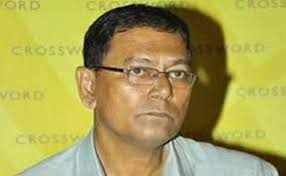
Who Was J Dey?
J Dey was one of India’s most respected crime journalists. He worked with several top newspapers, including Mid-Day, and had built a reputation for fearless reporting on Mumbai’s underworld, particularly on Dawood Ibrahim, Chhota Shakeel, and Chhota Rajan.
He had authored two books: Zero Dial: The Dangerous World of Informers and Khallas, which documented the underworld’s rise in Mumbai. Dey’s sources were deep inside the criminal world — and so were his risks.
The Murder: Broad Daylight Ambush
On that Saturday afternoon, Dey was riding his motorcycle in the Powai area when four men on two bikes cornered and shot him five times at close range. He collapsed instantly.
The execution-style killing bore signs of a professional hit — and speculation turned quickly toward underworld revenge.
Investigation Begins: A Chilling Lead
The Mumbai Police launched a massive probe. Initially, theories included:
Dey’s recent articles exposing underworld activities.
His investigations into the oil mafia.
Alleged links to high-profile gangsters.
Soon, the case took a shocking turn — all evidence pointed to Chhota Rajan, a former Dawood associate-turned-rival, as the mastermind behind the murder.
The Motive: A Grudge That Turned Deadly
Chhota Rajan was reportedly upset with Dey’s reporting. According to police, he believed Dey was portraying him as weaker than Dawood in his articles and upcoming book. Rajan, who prided himself on being “a patriotic don” (one who claimed to never attack Indians), felt betrayed.
Dey had unknowingly crossed a line — and paid with his life.
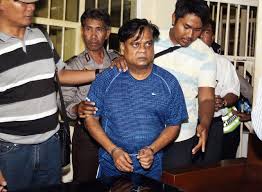
Arrests and Charges
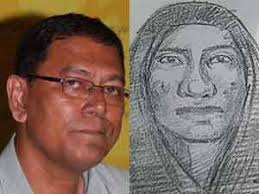
Within months, police arrested 11 people, including shooter Satish Kaliya, and journalist Jigna Vora, then deputy bureau chief at Asian Age. Vora was accused of providing Dey’s personal information to Rajan out of professional rivalry.
This added a bizarre twist to the case — a journalist being accused of facilitating a fellow journalist’s murder.
Trial and Conviction
In 2018, a special MCOCA court in Mumbai convicted Chhota Rajan and 8 others for murder and conspiracy. He was already in custody, having been extradited from Indonesia in 2015. However, Jigna Vora was acquitted due to lack of evidence.
The judgment brought partial closure, but many believe the real web of connections behind Dey’s murder remains buried.
The Chilling Impact on Media
Dey’s murder was a wake-up call for crime journalists across India.
-
Many began to avoid writing on active underworld figures.
-
Newsrooms introduced extra security for reporters.
-
Self-censorship rose in the name of “safety.”
It also highlighted the lack of legal protection for journalists working in high-risk beats.
Was It Just About Ego?
Many still debate if the motive was truly ego-driven. Could it have been:
-
A political ploy using the underworld?
-
A cover-up for deeper corruption Dey had uncovered?
-
An old betrayal, disguised as journalistic fallout?
These questions remain unanswered.
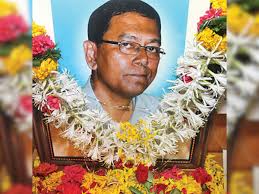
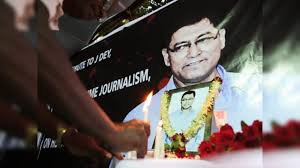
Today, J Dey is remembered as a martyr for fearless journalism. Annual awards are held in his honor, and many young journalists cite him as an inspiration.
But his death also serves as a warning — that truth comes at a price, especially when it threatens powerful people in shadows.
In India’s most infamous crime cases, one pattern repeats itself: truth often comes too late — or never at all. While the public watches closely in the early days, time blurs facts, legal delays dilute outrage, and media trials replace due process. The result? Victims are forgotten, and perpetrators slip through cracks.
Whether it’s the Jessica Lal case’s years-long battle for justice or the ongoing doubts around Sushant Singh Rajput’s death, these stories show us how vulnerable truth becomes when power, privilege, and politics collide.
We must stop seeing these incidents as isolated. They are a mirror to our systems — of policing, courts, governance, and public conscience. Every time we fail to seek clarity, hold institutions accountable, or treat grief with sensitivity, we allow injustice to normalize.
The fight for justice doesn’t end in courtrooms. It continues in conversations, in journalism, in public memory, and in policy reform. Only when we care enough to keep asking questions, to humanize the headlines, and to demand reform — can we hope for a society that’s not just lawful, but just.