
Santoshi Kumari Starvation Case – Girl in Jharkhand reportedly died of hunger due to Aadhaar failure.
Santoshi Kumari Starvation Case: Jharkhand Girl Dies of Hunger Due to Aadhaar Failure
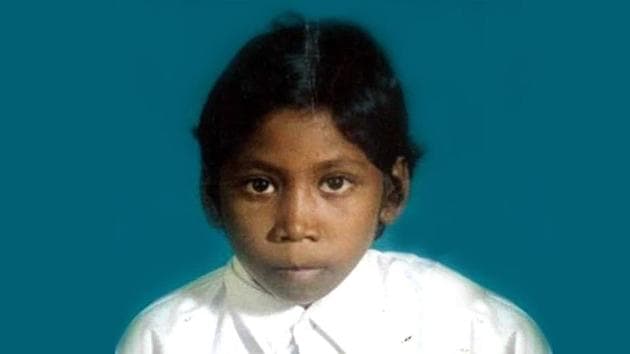
The Santoshi Kumari starvation case stands as one of the most heartbreaking and controversial real-life tragedies in modern India. In 2017, an 11-year-old girl named Santoshi Kumari from Jharkhand died after days of starving, reportedly because her family’s ration card was cancelled due to the failure of Aadhaar linkage. What should have been a story of poverty alleviation instead became a symbol of administrative failure, misplaced priorities, and a nation’s silence on hunger.
The case sparked nationwide outrage and forced people to ask: How can a child die of hunger in a country with overflowing grain silos? Was it mere negligence, or a consequence of a flawed digital welfare system?
The Incident: A Cry for Rice That Went Unheard
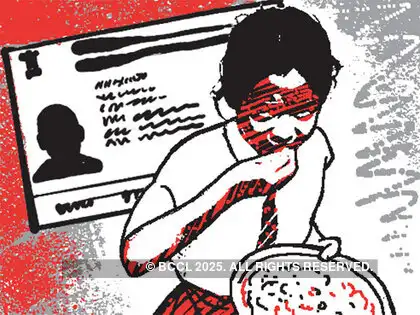
On September 28, 2017, in Simdega district of Jharkhand, Santoshi Kumari collapsed after reportedly going without food for several days. Her last words were “Bhaat, bhaat” (rice, rice)—a heartbreaking plea that still echoes in the ears of those who followed the case.
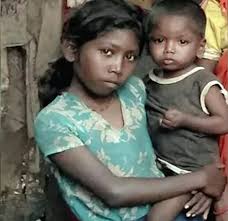
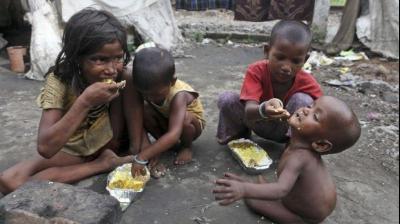
Santoshi belonged to a Dalit family living in abject poverty. Her mother, Koyli Devi, worked as a daily wage laborer, struggling to feed the family. Their only stable source of food was the government-subsidized Public Distribution System (PDS), which required biometric Aadhaar authentication for access. But in August 2017, their ration card was deactivated due to non-linkage with Aadhaar.
For over a month, the family was denied ration. No emergency support came. No one from the local administration intervened in time. When Santoshi fell ill, there was no food, no money, and no one to help.
The Investigation: Bureaucracy, Denial, and a Blame Game
The aftermath of Santoshi’s death led to widespread condemnation and a media storm. Human rights activists and civil society organizations pointed fingers at the Aadhaar-PDS linkage policy, calling it exclusionary and dangerous.
However, the Jharkhand government was quick to deny any link between her death and starvation. Officials claimed that Santoshi died due to malaria or a stomach infection, despite her mother and local villagers asserting otherwise.
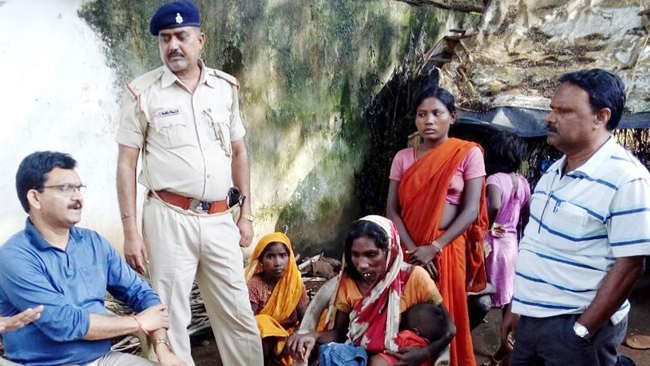
A fact-finding team led by the Right to Food Campaign found that the family had not received any ration for two months due to Aadhaar de-linking. They also discovered that several other families in the area faced similar exclusions.
The administration blamed a “technical glitch,” but the damage was already done. The death of a child due to alleged denial of food in a democracy raised urgent questions about the Aadhaar system’s implementation and ethical responsibility.
The Forensic Angle: A Case Without an Autopsy
Unlike most high-profile true crime cases, there was no autopsy or detailed forensic analysis in Santoshi’s death. This allowed the government to dodge accountability and cast doubt on the starvation narrative.
Medical officers provided inconsistent statements—some citing fever, others malaria. But without a postmortem, the cause of death remained officially inconclusive. Critics argue that this was a deliberate move to bury the case and avoid further embarrassment.
Despite mounting evidence from grassroots reports, the government maintained its position that Aadhaar was not to blame. But human rights watchdogs and public interest litigators saw it as a clear failure of policy and governance.
The Public Outcry: Citizens Versus the System
Santoshi’s death became a rallying cry for activists and citizen groups demanding reform in the digital welfare delivery system. Protests erupted across India. Hashtags like #AadhaarKills and #JusticeForSantoshi trended on social media, while editorials in major newspapers condemned the state’s apathy.
Petitions were filed in the Supreme Court challenging the Aadhaar mandate. Journalists, RTI activists, and lawyers uncovered similar cases of starvation deaths across Jharkhand, Odisha, and Uttar Pradesh—often involving ration denial due to failed biometric authentication or Aadhaar errors.
The tragedy also caught international attention, with organizations like Human Rights Watch and Amnesty International raising concerns about digital exclusion and social welfare failures in India.
The Verdict: No Real Justice Yet
Even after years of media coverage and public outrage, no one has been held directly accountable for Santoshi’s death. Her family continues to live in poverty, and no compensation or public apology has been formally extended.
The government quietly modified its stance on mandatory Aadhaar for PDS in some states, introducing offline alternatives like OTP or manual entries. But for many, these were too little, too late.
There has been no formal verdict, no recognition of the death as a failure of the system, and certainly no reform on the scale the incident demanded.
Theories and Debates: Who Failed Santoshi?
Was it a case of starvation? Was it a system error? Or was it a mix of both—poverty compounded by bureaucratic indifference?
Some believe Santoshi’s case was the result of a blind push for digital inclusion without safeguards. Others point to caste and class bias, arguing that rural Dalit communities were left out of welfare systems deliberately or through neglect.
Experts have debated whether the government’s data-centric approach to welfare is harming those most in need. The emphasis on biometric authentication without ensuring connectivity or fallback options became a lethal flaw.
The truth, as always in such cases, lies in the intersection of policy, privilege, and poverty.
Legacy of the Santoshi Kumari Case
The tragedy of Santoshi Kumari forced India to confront the human cost of digital governance gone wrong. It showed that technological solutions, without humane execution, can worsen existing inequalities.
It also exposed how those on the margins—rural poor, Dalits, women—often remain invisible until a tragedy forces the spotlight. Her story became a wake-up call for policy makers, media, and civil society.
Even today, the case is cited in legal arguments, academic discussions, and human rights campaigns as a turning point in India’s Aadhaar narrative.
Conclusion: A Death That Should Have Never Happened
The Santoshi Kumari starvation case is not just a story of hunger-it’s a tragic indictment of a system that failed its most vulnerable. It reminds us that behind every policy, there are real people whose lives hang in the balance.
While the headlines have faded, the moral questions remain: How can a nation let its children die for want of food? And when will justice mean more than just denial?
As long as poverty, exclusion, and indifference exist, Santoshi’s haunting last words“bhaat, bhaat”will echo as a warning we must never ignore.